Visualizzazione post con etichetta WORKING AS PHOTOGRAPHER. Mostra tutti i post

mercoledì 13 giugno 2012

The Irony of Nils Jorgensen


Nils Jorgensen is one of the most ironic photographers I have ever met. His photographs do not need to be commented. In each there is something that bites, that attracts you to go nearer. Here he told about his life. [Source: iN PUBLIC]

"Both my Mother and Father have influenced my choice to be a Street Photographer. My Mother is an artist and throughout my childhood I was introduced to the real inner struggles that is the life of creativity. It was the norm for me to see her paintings in progress, and my constant childhood memory was one where her painting and my life were intertwined. My Father is a doctor, but has been a keen photographer all his life and encouraged me when I showed an interest. He originally studied to be an architect, and his keen sense of design is one which I hope I have inherited. In 1976 he gave me his old Leica IIIg which I still have today. Although at the time there were cheaper, simpler, more automated cameras to choose from, he told me I should learn to master technique first. And this I did. Balanced with this wise technical advice was his love of photography books and magazines. One book above all others was my favourite. He had the Time Life Photography Year 1973 Edition book. This remarkable edition has outstanding images by the world’s greatest photographers, but it was the portfolios of Paul Strand, Diane Arbus, Andre Kertesz, Elliott Erwitt and Tony Ray-Jones which hit me more than any of the others. And still today thirty years later, as I re-open this treasured book, these images have lost none of their power to inspire. All these photogaphers practiced what is now termed as ‘Street Photography’. Little did I know then, at the age of 14, that I was to dedicate the rest of my life to this great art".
Photo by Nils Jorgensen

Photo by Nils Jorgensen

Photo by Nils Jorgensen

Photo by Nils Jorgensen

Photo by Nils Jorgensen

Photo by Nils Jorgensen

Photo by Nils Jorgensen

sabato 19 maggio 2012

THE FUTURE WAS WOMEN - Harri Peccinotti

[SEE THIS BLOG ON CHROME, SAFARI AND MOZILLA, NOT ON INTERNET EXPLORER] 
Ideally, my dear readers, i would show you a new talent, a contemporary photographer with an original point of view but I could not remain indifferent when I found out the 'graphic' shots Harri Peccinotti. It 's what happened: 3 years ago I attended a library of photography at number 55 of Scalo San Lorenzo in Rome, where for some time has also been home to the photographic collective OnOff Picture. There I followed a seminar on the photo-reportage and when I arrived early to the lessons I I thumbed through the pages of the books, hundreds of pages and images that would have ended up lingering in my subconscious mind up to date. It was in ths situation that for the first time I had under my eyes the images of Peccinotti: a teen licking a pink popsicle, a swimsuit that adheres to a woman's womb, leaving a glimpse of her nipple turgid.
Photo by Harri Peccinotti
A few days ago, browsing in the ether, I came across an article on the author of the photographs that suddently I recognize: so I wanted to rebuild his life and his revolutionary work which continues to influence the collective imagination of our generation.

<< I love nature in all its forms. And the most beautiful forms, in this imperfect world, will always be those of women >>
. So openly told Harri Peccinotti. Today, seventy years old with long white beard, yesterday, in the sixties, founder and art director of Nova magazine, feminist and totally unconventional. London, born in 1935, at age 14 left school to devote himself to jazz music with a bass trombone under his arm. He moved towards commercial photography creating covers for books and records until 1965, when he founded a magazine with some friends in the field of visual arts, one of the most influential magazines of the sixties: Nova. At a time still full of taboos, where women's magazines insist on themes of family and domestic life, Peccinotti created a magazine for women AA "Above Average Income and Intelligence".
Photo by Harri Peccinotti


The magazine was about philosophy, sociology, politics, feminism and sexual freedom. The offices were crowded with journalists kissed from the wind of cultural emancipation, which churned out provocative articles and the pictures that were proposed on Nova represented a woman who exercised her right to sexual freedom, through an imperfect and terribly sexy body. For the photographs were never used professional models, but ordinary women and for the first time, black women.
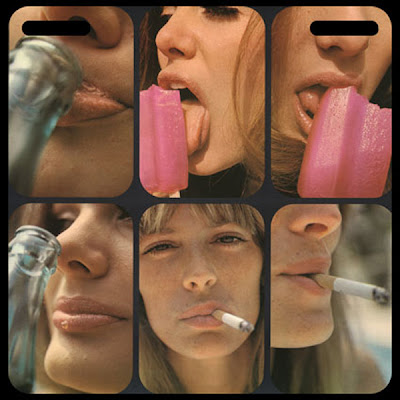
Photo by Harri Peccinotti
<< I played music in clubs and on stage there was a multi-ethnicity that came naturally into my pictures>> Peccinotti said.
Nova magazine has helped to eradicate women from the kitchen, household, from the hearth, from home-prison more suffocating. Once Harri Peccinotti bought by an American photographer the entire sequence depicting his wife in the act of giving birth to a child and published it. << We did sell out in ten minutes >> he recalls.
Harri has worked as a photographer and as a photo-consultant for Elle, Vogue, Harper's Bazaar, Flair, Vanity Fair, Rolling Stone, Queen, and especially for the French weekly Le Nouvel Observateur.
To a contemporary observer, the photographs of Harri might seem trivial, considering the nauseating overload of "sexy" images of Western society. However he was to capture for the first time on film the sexy side of daily life and the sensuality of the daily actions of every woman, completely reinventing the allusions to sex and reversing the image of the housewife and obedient woman. His style has been and remains unmistakable: close up, intimate, graphic and natural at the same time. << I always made a lot of close up, because I think they are graphic, it's like approaching the subject. And this makes the poto erotic, not the other >> Peccinotti said commenting on his work.

To see more pictures, and to know the sources of this article, go to the post in italian.

mercoledì 18 aprile 2012

Eat, Pray, Photograph. Interview with Cristina Capucci - When the portfolio is a diary


Cristina Capucci stops, breathes and starts listening. So she feels the vibrations of sorrounding nature, establishes a contact with his subject through silent empathy, in unison with the light and the environment and only then take a photograph. She travels. In a Chinese metropolis or in a forest in Russia, she records his feelings and brings them with her, translating them into images warm, embracing and airy.

Photo by Cristina Capucci

Tell us about your experience in China (see Bio of Cristina C. at bottom of page)

Photo by Cristina Capucci
My experience in China has coincided with a special moment in my life because I was being awakened in me a strong interest in natural medicine and spirituality, and I was starting my career as a photographer. China was a pristine environment in terms of both employment opportunities and of expression. Thanks to a series of virtual contacts I had built before leaving, once there I managed to get into a network for a period up to play the role of supervisor for Elle China  photo shootings: I was on set and I checked that the work was being done the right way. It was, rather than a creative direction, an "operational direction". In China, I shot a lot of catalogs, I worked for Aquascutum and other known brands.

What do you say to your models on the set while shooting? How to create a harmony with them?
When I shoot I always try to go beyond the image of the physical model. I don't say: "Move" or "Shut serious" or "Angry," but I try to communicate a "Smile Inside" to see the light and the potential that comes from the person. I try to convey positive feelings to evoke a natural joy in the model which then becomes the strength that comes when you look at a successful photograph, a portrait that communicates serenity. Many of my photographs are stolen shots improvised while the model is moving. I ask them to create a movement and then I catch the right moment, when they forget the embarrassment and the pose and show the most natural part of his personality. I like being able to create portraits in fashion photography set, always playful and a little surreal.
What are the commissions you prefere?
Surely the editorials, in which I can express myself freely. 

Fashion editors love to work with whom?
Matteo Greco has a great talent and is definitely a stylist on the rise. Besides being a dear friend, with him I realized most of my 'man' shootings. With Ivan Bontchev, fashion editor of URBAN Magazine, I am fine, I feel completely free,  and the work is transformed into a beautiful day with your friends. Lately I shoot for Interview Russia with Viviana Volpicella. It excited me very much and it gave me the charge to continue with ever more enthusiasm in my work. 
Plans for the future?    As a photographer, go on like this, day after day. There I realized how important it is to be well anchored down to the ground even while 'Surf the wave'. For me it is essential to continue work on myself and on a professional level. For a year I found time to go to university in Naturopathy and Chiropractic, subjects that always interest me, helping me to 'have off' and that allows me to keep my personality in the world of fashion and photography. One of my dreams is to one day have a place in nature where I can apply this knowledge on people and in the veterinary field. You may say I'm pursuing my life on these two tracks of which one supports the other.


Photo by Cristina Capucci
If I gave you a ticket with a  open destination and a month available, where would you go?

Always in New York. There is so much to do! When I'm there I feel that there is an invisible city of angels made over New York! It 's really a city of opportunity, people are open and I always feel at home whenever I go there. Once I was commissioned a photo shoot when I was still at the airport and I was able to organize a photo shoot in less than three days! New York gives me a charge and an energy that I can take with me when I return to Milan and I wish I could go more often.


The rose of your favorite photographers.

Mario Testino was the photographer who made me fall in love with fashion photography and that inspired me most in my infancy. Venetia Scott, Bruce Weber is without doubt my favorite.

What inspires you?
My 'vision' and my life experiencesThe images I create reflect my feelings in a given period.  My portfolio is like my personal diary. 

How did you establish your collaboration with Vogue Russia?

I was starting out. Only six months working as a professional and return from Shanghai, I met my family at Moscow airport. I was there as a tourist, but decided to introduce myself to Vogue Russia and tried to meet the fashion editor. I could not get a date, but still left my portfolio at the reception of writing ...

What is essential to take a photograph that is affecting and communicative?
Listen. Listening to the feeling at that moment. Until you see the image even before you take it.


Bio
Born in Como (Italy), studied Communication Science, graduating with a thesis on Experiential Marketing in Online Environments and Masters in Advertising at the European Institute of Design. After several years of work in 'family business in the fashion industry, she serves as Head of Communications and later as Manager of Production and Procurement in Asian markets with a specific focus on China and India. He moved to China where he worked with several photographers and as Assistant Creative Director for Elle China, working for brands such as Aquascutum, and L'Oreal. He decides to devote herself entirely to photography.
His photographs have been used for covers of various publications in Italy and abroad and numerous commercial work: Ralph Lauren (advertorial), Aquascutum,Extyn Italy, Christian Pellizzari, Intentions - Bologna, Shopping Guide Moscow,Vogue Russia, Urban Magazine (RCS), Slurp Magazine, Nylon Magazine Mx,Magazine Contributor, New wave Magazine - TO2W, MODELS.COM, Neo 2, Essential Homme Interview and Russia.


Photo by Cristina Capucci

venerdì 23 marzo 2012

The thin thread of every story - 6Mois magazine


During the last festival in Perpignan, the international event on photojournalism, there was a queue in front of her desk: photographers from all aver the world with their book or their MacBook Air in their hands to show their portfolios. Marie-Pierre Subtil realized at that moment that 6 Mois, the magazine she founded and directs, << has become a landmark for the world of photojournalism>>.

Photo by Alessandra Sanguinetti


.


6 Mois is an idea that was born and grew quickly. The editors are all in two bright rooms of the palace of the publishing house Les Arènes, in the Rue Jacob in Paris. Three young journalists and Marie-Pierre Subtil (Editor in Chief) edit every issue alone.
Cover of the III number of  6Mois in bookstores by March 13, 2012 
Even for this << 6Mois is a biannual magazine. We need time to get things done with great care >> says the chief editor. The first issue came out a year ago and the sales have already exploded in France and abroad. A number every six months, 350 pages, 100 photographs, no advertising (unbelievable, I repeat: no advertising!), an average of 40 000 copies sold and a growing number of subscribers around the world, including Italy. 6 Mois was born in the spring of 2011, among the laughters of the experts who repeated: photojournalism is dead ... you are crazy .. The first run went out immediately and was quickly reprinted. Since March 13 there's the third number in the libraries. Africa is the theme of the cover issue. The texts are still only in French [even if publishers are working on co-publishing agreements with publishers in major local languages], however, nothing of the journal talks about France and the mix of photographers is truly international, if you look at the names of the authors of the second number: a Dane, a Frenchman, an Englishman, a Swede, an American, a Chinese, an Argentine and two Italian photographers [Alessandra Sanguinetti and Roberta Valerio.


Marie-Pierre Subtil 
Marie explains the idea behind the magazine: << We are in the post-globalization. Right in the post-Internet. On internet there are billions of new images every day of every kind and shape. The magazine takes the time to make a selection from the thousands of photographs produced of order and to organize them in a form that tells a story. Readers have learned that this is usefull>>. Marie explains that she chooses the photographs and the 'stories' to be published under a very subjective criterion: << If you strike me, if you touch me, it wiould touch the other >>. Each photo is mounted in a story as long and accompanied by captions that are written as a result of an intensive dialogue with the photographer who took the pictures. << I prefere photographs that come from a personal project of one author and that take time and passion. We are not interested in isolated scoop photos >>. For questions that arise about the subject of the photographic reportage, there is the article that follows each report.Then there is the formula of The World FotoBio or The World of dedicated to the imagery of a photographer. 6 Mois released in March and in October, costs 25 euros. For me it's worth it. Information and excerpts from the article whether the March issue of Elle. 

Photo by Vivian Maier

domenica 18 marzo 2012

The view that PARR has about PERESS

Leafing through a high and heavy volume of Magnum, I hit the review that the renowned photographer Martin Parr gave his colleague Gilles Peress (France, 1946). Both professional photographers, connoisseurs of film and light, Parr is the photojournalist of the grotesques trends of the dominant culture in the society; instead of Peress that is a war photojournalist.
Belfast, 1984, on the morning of the death of Bobby Sands  - Photo by GIlles Peress
Here's the comment from Martin Parr to Gilles Peress:

<< Gilles Peress gave two main contributions to the brief and turbulent history of the representation of conflict. First, has tried to understand what problems meets a photographer who is witness of the events. This happened in the book Telex Iran, published in 1984. The term "telex" refers to the means by which Peress communicated with the Paris offices of Magnum, when followed for five intense weeks, the hostage crisis in Iran. 

The problems related to being a witness, the choice to accept or decline appointments as they are or find the correct captions, are also the subject of the text that makes its way through a photo and the next. Apparently it does not seem a very radical stance but do not forget that the photojournalist should be the one who tells the truth. Confessing the subjective character of his work, Peress focuses on an important issue.

The second contribution comes from the way in which Peress frames his subjects.We always feel we are faced with a fragment, with people and things that are partly inside and partly outside the image. One gets the feeling that what we see is a small part of a larger and more chaotic scene. Since Peress often worked on war fronts, this is probably true in most cases. However, few photographers were able to evoke a feeling of energy and confusion with his own eloquence. His visual language draws its origins even for political reasons. Peress has tried to move away from the traditional style, common to many reporters, which tends to soften, with the symmetry and sharpness of the shot, even the stronger despair.
While depicting situations extremely confused, these images have a great appeal. 
Try to get seated and to decipher these complex, exciting photographs. I have never been in a country at war and, honestly, I hope I never have to have this experience. Yet I have the impression that the photographs by Gilles Peress  made me understand clearly what it means >>. 

Photo by Gilles Peress - In 1979, when Islamic fundamentalists occupied the U.S. embassy in Tehran and took  fifty-two  persons as hostage, Peress leaves for Iran. He spent five weeks in the heart of the revolution. His famous book, Telex Iran, in the name of Revolution, describes the fragile relationship that develops between American culture and that of Iran during the hostage crisis.


Photo by Gilles Peress  

Photo by Gilles Peress